What if the most powerful version of the High Atlas only reveals itself when winter takes over?
Snow, silence, and dramatic altitude changes turn this climb into something far beyond a standard ascent. For those of us drawn to challenge, clarity, and rare mountain moments, the winter climb of Mount Toubkal answers a deep need for achievement that ordinary treks simply cannot meet.
In this guide, we walk through what makes a winter ascent exceptional—snow trekking conditions, the role of guides, preparation demands, and the unforgettable scenery that defines this high-altitude experience.
Why Winter Changes Everything on Mount Toubkal
Rising to 4,167 meters, Mount Toubkal is already a demanding objective. Winter transforms it into a snowbound alpine climb that tests endurance, planning, and mindset.
Unlike warmer months, the Mount Toubkal winter climb replaces dusty trails with packed snow, icy switchbacks, and crisp mountain air. The terrain becomes quieter, the ascent more technical, and the sense of isolation far more intense. We are not just walking higher—we are adapting constantly to shifting snow conditions and colder temperatures.
Winter also reshapes pacing. Shorter daylight hours and colder mornings require early starts and steady movement, making preparation and discipline part of the experience.
Snow Trekking: The Core of the Winter Experience
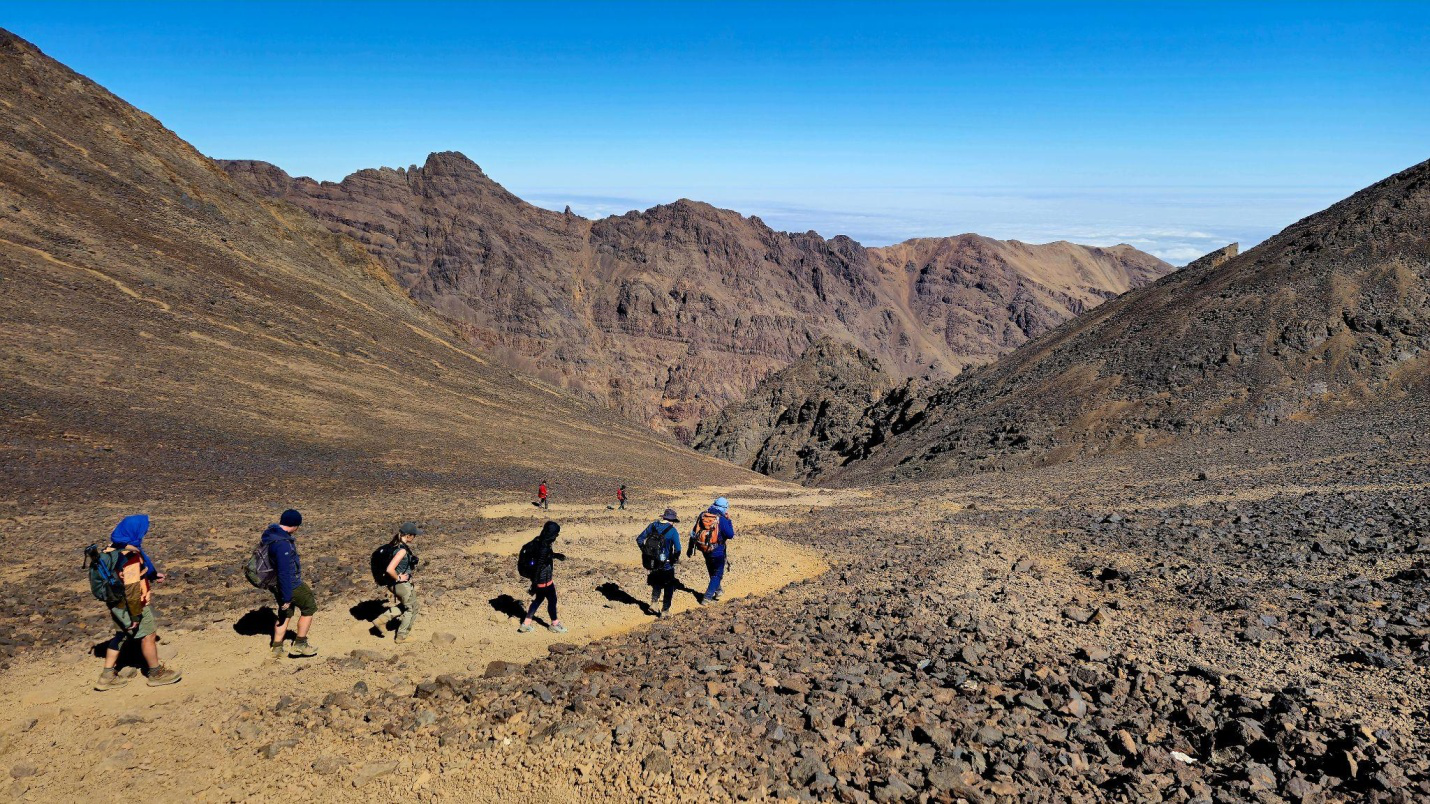
Snow trekking is the defining feature of a winter climb of Mount Toubkal. From the village of Imlil upward, trails gradually give way to snowfields, particularly above the refuge.
Key elements we face during snow trekking include:
- Firm morning snow that allows efficient movement with crampons
- Softening afternoon layers that increase physical effort
- Icy ridge lines near the summit that demand careful foot placement
During a Mount Toubkal trek in winter, every step requires awareness. Snow depth can vary daily, and weather shifts quickly at altitude. This is where winter Toubkal trekking becomes as much about judgment as stamina.
Snow also amplifies soundlessness. Footsteps are muted, wind carries farther, and the mountain feels suspended in stillness. Many of us find this sensory quiet to be one of the most memorable aspects of the climb.
The Role of Guides in Winter Ascents
A Mount Toubkal guided trek becomes significantly more important in winter. Snow obscures trail markers, alters familiar routes, and increases exposure on summit day.
Guides support winter climbers by:
- Assessing snow stability and weather patterns
- Selecting safer ascent and descent lines
- Managing pacing to avoid cold-related fatigue
- Providing instruction on crampon and ice axe use
When we climb Mt. Toubkal in winter, local knowledge is not optional—it is foundational. Conditions can change overnight, and a guided approach reduces unnecessary risk while allowing us to focus on the physical and mental challenge of the ascent.
What the Winter Scenery Offers That Other Seasons Cannot

The winter climb of Mount Toubkal delivers visuals that feel almost unreal. Snow settles across the High Atlas peaks, creating sharp contrasts between white ridges and deep blue skies.
Distinct winter scenery highlights include:
- Snow-covered valleys stretching far below the trail
- Cloud layers forming beneath us during early ascents
- Sunlight reflecting off ice crystals near the summit ridge
- Distant peaks appearing sharper and closer in cold air
Unlike summer, when haze can soften views, winter offers clarity. Standing near the summit during a Mount Toubkal winter climb often means literally being above the clouds, watching them move beneath our feet.
Physical and Mental Demands of Winter Toubkal Trekking
Winter magnifies effort. Cold temperatures require more energy, and snow adds resistance with every step. Even experienced hikers notice the difference.
Challenges we prepare for include:
- Increased calorie burn due to cold exposure
- Slower ascent times because of snow conditions
- Mental focus needed on exposed, icy sections
A Toubkal hiking tour in winter rewards patience and composure. The summit push is rarely rushed. Instead, it becomes a steady, deliberate progression where teamwork and rhythm matter more than speed.
Equipment That Defines a Successful Winter Climb
Unlike warmer seasons, winter requires specialized gear. Proper equipment is not about comfort alone—it directly affects safety and performance during the climb.
Essential winter items include:
- Insulated waterproof boots
- Crampons suitable for packed snow and ice
- Ice axe for balance and security
- Layered clothing systems for temperature control
- Cold-weather gloves and face protection
During a Mount Toubkal guided trek, guides often assist with gear checks, ensuring we are properly equipped before reaching snow-heavy sections.
Summit Day: Where Effort Meets Reward
Summit day during a winter climb of Mount Toubkal begins early. Headlamps cut through darkness as we ascend frozen slopes, each breath visible in the cold air.
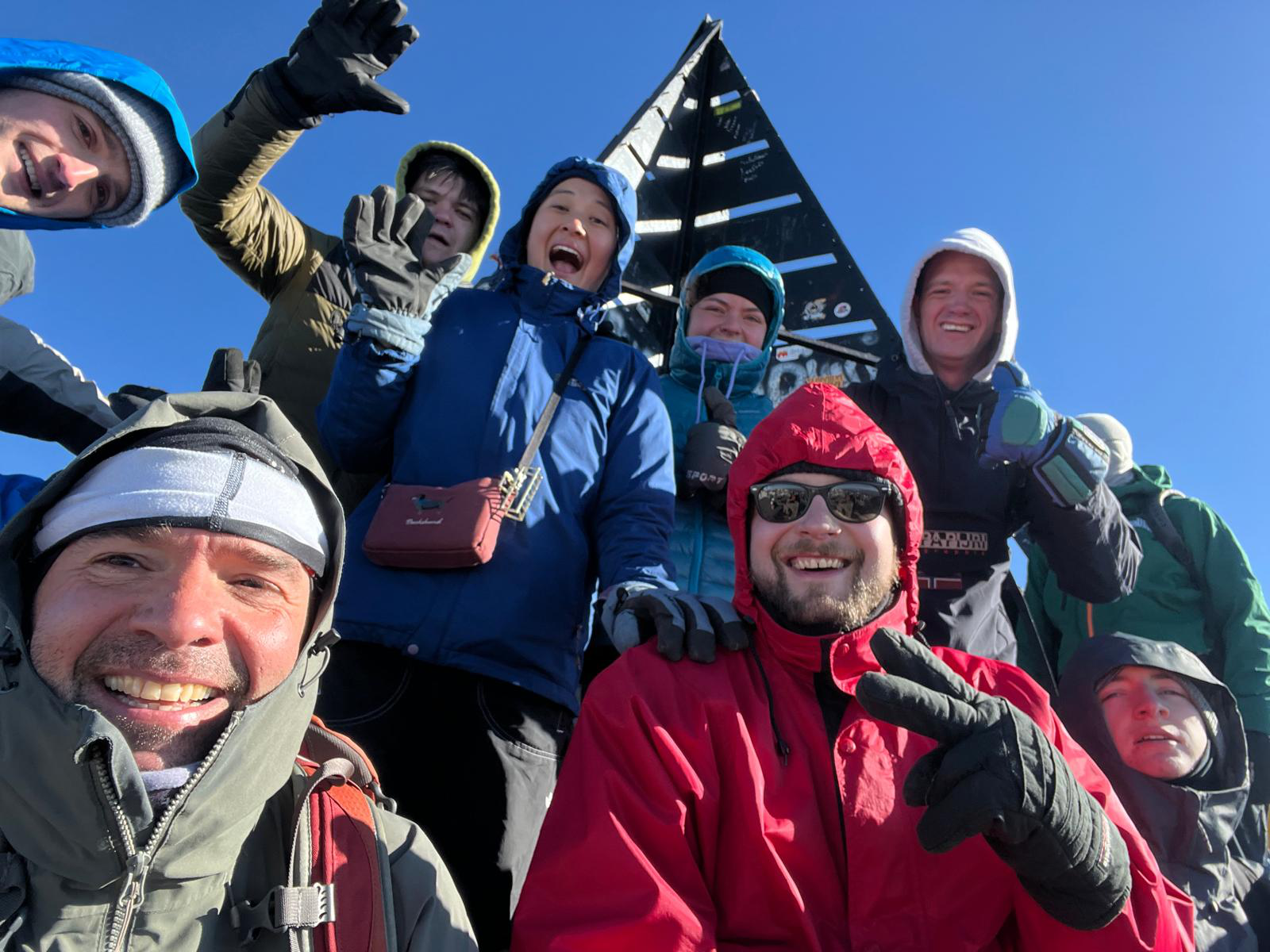
The final ridge often presents the most technical conditions. Snow is firmer, wind stronger, and exposure more noticeable. Yet reaching the summit in winter carries a rare satisfaction. The quiet, the altitude, and the scale of the surrounding peaks create a moment that feels earned in every sense.
Descending safely is equally important. Snow conditions can change rapidly as temperatures rise, making guide coordination and timing essential.

Who Should Consider a Winter Mount Toubkal Trek?
Winter ascents are ideal for those who:
- Have prior hiking or trekking experience
- Seek a physically demanding objective
- Value solitude over busy trails
- Want a true alpine-style climb rather than a casual hike
For many of us, the winter climb of Mount Toubkal becomes a personal benchmark—a test of preparation, resilience, and focus.
Ready to Stand Above the Clouds?
What would it feel like to reach North Africa’s highest summit while winter holds the mountain in silence? The Mount Toubkal winter climb is not just about altitude—it is about precision, trust, and commitment in demanding conditions.
When planning a Mount Toubkal guided trek, working with experienced local professionals helps manage winter-specific challenges, from snow navigation to summit-day timing.
Those considering Toubkal trekking in winter can connect with Omar Adventures to plan a climb that prioritizes safety, seasonal knowledge, and the full mountain experience—so the focus stays where it belongs: on the climb itself.