
UNESCO World Heritage Tours
Travel Through Morocco’s Living History with Omar Adventures
Morocco’s history is not contained in a single monument or city. It stretches from Roman-era ruins and medieval medinas to fortified desert settlements, Atlantic ports, and a modern capital shaped by several architectural traditions. A UNESCO World Heritage tour brings those layers together in one journey, giving travelers a clearer view of how the country changed across centuries while preserving places that remain part of everyday Moroccan life.
Morocco currently has nine properties inscribed on the UNESCO World Heritage List, and all nine are cultural sites. They include the medinas of Fez, Marrakesh, Tétouan, and Essaouira; the Historic City of Meknes; the Archaeological Site of Volubilis; the Ksar of Ait-Ben-Haddou; the Portuguese City of Mazagan in El Jadida; and Rabat, Modern Capital and Historic City.
With Omar Adventures, these places can be connected through a private, family, or small-group itinerary rather than treated as isolated stops. The route can focus entirely on architecture and history or become part of a wider Moroccan journey that includes food, local communities, the Atlas Mountains, and the Sahara.
Omar Adventures is an independent Moroccan tour operator. References to UNESCO on this page describe World Heritage-listed places that may be included in a tour and do not imply affiliation with UNESCO.

Why Morocco’s UNESCO World Heritage Sites Matter
UNESCO World Heritage status is given to places considered to have outstanding universal value. In Morocco, the list tells a particularly varied story. Some sites preserve the urban form of old Islamic capitals. Others reveal Roman influence, Andalusian connections, pre-Saharan building traditions, Portuguese military architecture, or the meeting of historic Morocco with twentieth-century urban planning.
That variety is what makes a heritage-focused route worthwhile. Instead of seeing “old Morocco” as one period, travelers can move through very different chapters of the country’s past and notice what carried forward: courtyard architecture, craft traditions, defensive walls, religious buildings, market life, water systems, and the relationship between cities and the landscapes around them.
A knowledgeable Morocco tour guide can help connect what is visible today with the historical context behind it, especially in large medinas where individual monuments make more sense as part of the wider urban fabric.
The Nine UNESCO World Heritage Sites of Morocco
A customized Omar Adventures itinerary can include a selection of these sites or build a longer route around all nine, depending on your arrival point, available time, interests, and preferred travel pace.
Imperial Cities and Historic Medinas
- Medina of Fez: Inscribed in 1981, the Medina of Fez preserves the urban character of a city founded in the ninth century and later developed as a major cultural and spiritual center. Its dense lanes lead between madrasas, fondouks, mosques, fountains, homes, workshops, and traditional commercial areas. A guided visit is especially useful here because the experience is less about one landmark and more about understanding how the medina functions as a historic city that is still very much alive.
- Medina of Marrakesh: Founded by the Almoravids in the eleventh century, Marrakesh became a major political, economic, and cultural center whose influence extended across North Africa and Andalusia. The World Heritage property includes the historic medina and is associated with landmarks such as the Koutoubia Mosque, ramparts, gates, palaces, gardens, and Jemaa el-Fna. It is an ideal starting or ending point for a heritage route because it also connects naturally with southern Morocco and the High Atlas.
- Historic City of Meknes: Meknes began as an Almoravid military settlement and rose to prominence as an imperial capital under Sultan Moulay Ismaïl in the seventeenth century. Its monumental gates, ramparts, palatial remains, granaries, mosques, and historic residential fabric reflect a distinctive meeting of Islamic and European planning influences. Meknes pairs naturally with nearby Volubilis, allowing travelers to move from an imperial Moroccan city to a much older archaeological landscape in the same part of the country.
- Rabat, Modern Capital and Historic City: Rabat offers a different kind of World Heritage experience. Its UNESCO designation brings together older components, including Almohad-era remains and historic quarters, with a twentieth-century new town developed during the French Protectorate. The result is a useful place to see how Morocco’s capital incorporated modern planning while retaining important earlier layers of the city.
Roman, Pre-Saharan, and Cross-Cultural Heritage
- Archaeological Site of Volubilis: Set in an agricultural landscape near Moulay Idriss Zerhoun, Volubilis preserves extensive remains of an ancient city that became an important Roman outpost. Mosaics, columns, arches, streets, and building foundations help reveal how Roman and local cultures met at the edge of the empire. For travelers interested in archaeology, it provides one of the clearest contrasts with Morocco’s later imperial cities.
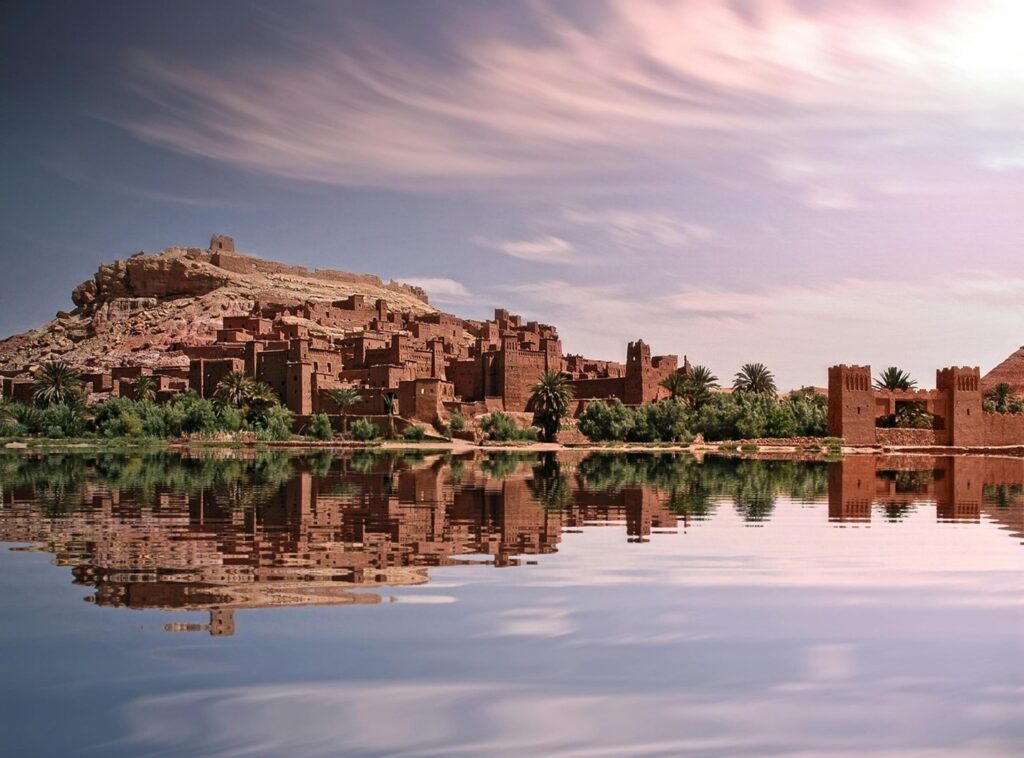
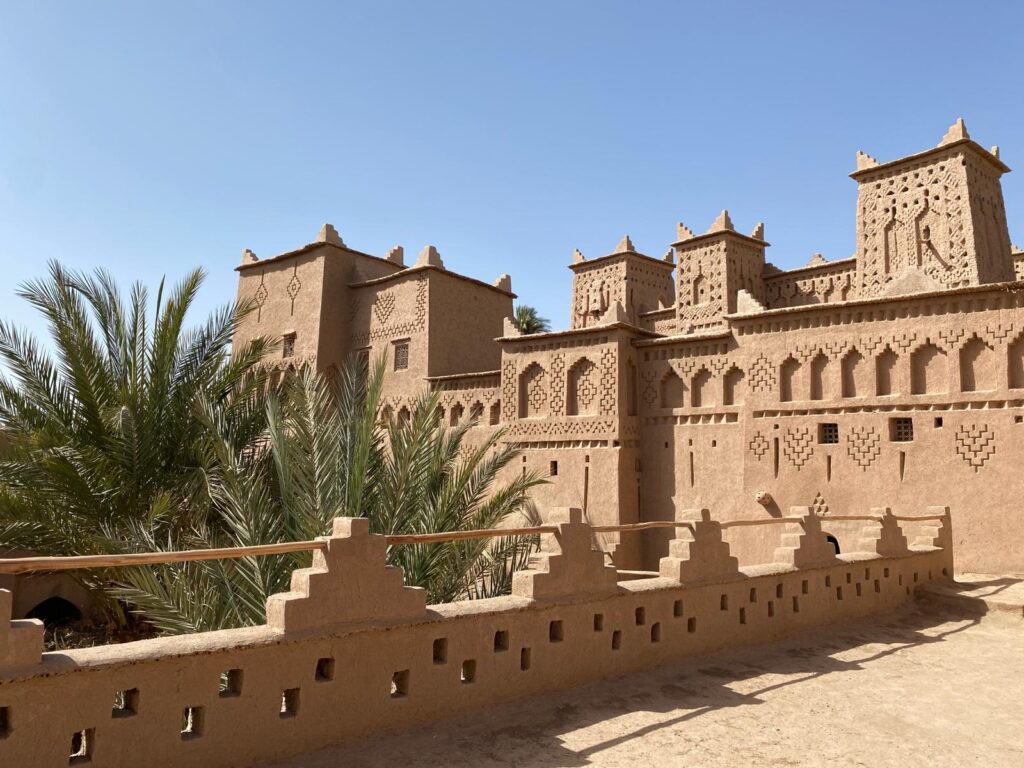
- Ksar of Ait-Ben-Haddou: Ait-Ben-Haddou is one of southern Morocco’s best-known examples of a traditional pre-Saharan ksar, a compact settlement of earthen buildings protected by defensive walls and towers. Its architecture reflects building traditions adapted to the climate and landscapes of the south. The site also sits along historic routes that once connected Saharan trade with Marrakesh, making it a natural heritage stop on journeys between the desert regions and the High Atlas.
- Portuguese City of Mazagan (El Jadida): On the Atlantic coast, the fortified Portuguese city of Mazagan presents another side of Moroccan history. Built as a Portuguese stronghold in the sixteenth century and later incorporated into El Jadida, it retains ramparts, bastions, and important buildings from the Portuguese period. Its design records centuries of exchange between European and Moroccan cultures and makes a strong addition to a coastal heritage itinerary.
Northern and Atlantic Morocco
- Medina of Tétouan: Tétouan’s medina reflects the city’s long connection with Andalusia. After the Reconquista, Andalusian refugees helped rebuild the city, leaving a clear imprint on its architecture, urban form, and artistic traditions. Smaller than some of Morocco’s better-known medinas, it offers a more compact heritage experience and can be included in a northern route linking Tangier, Tétouan, and other destinations in the Rif region.
- Medina of Essaouira: Essaouira, formerly Mogador, was developed as a fortified Atlantic port in the eighteenth century. Its street plan and defenses show European military influence adapted to a North African setting, while its history as an international trading port reflects the interaction of Amazigh, Arab, African, European, Muslim, Jewish, and Christian communities. Today, the medina’s ramparts, harbor, markets, workshops, and relaxed coastal character make it one of the easiest UNESCO sites to combine with a Marrakech-based trip.
What You Can Experience on a UNESCO Heritage Tour
A good heritage itinerary should do more than move from monument to monument. Depending on the route, your trip can combine:
- Guided walks through historic medinas, with time to understand their street patterns, neighborhoods, markets, religious architecture, and traditional crafts.
- Visits to archaeological and fortified sites such as Volubilis and Ait-Ben-Haddou, where the surrounding landscape is part of the story.
- Imperial-city history in Fez, Marrakesh, Meknes, and Rabat, with attention to how different dynasties shaped Morocco.
- Atlantic heritage in Essaouira and El Jadida, including port history, fortifications, and the cultural exchange created by maritime trade.
- Northern Moroccan and Andalusian influences in Tétouan, which add a different architectural and historical perspective to a country-wide journey.
- Time for food, markets, local workshops, photography, and unhurried exploration rather than treating each UNESCO site as a quick checklist stop.
Ways to Build Your UNESCO Tour
The strongest custom itineraries are not simply longer versions of standard tours. They are built around the traveler’s priorities.
Imperial Cities and Roman Morocco | About 5–7 Days
A focused route can connect Rabat, Meknes, Volubilis, and Fez. This works well for travelers primarily interested in imperial history, architecture, archaeology, and medina life without trying to cover the entire country in one trip.
Marrakesh, Ait-Ben-Haddou, and Atlantic Heritage | About 5–8 Days
Start in Marrakesh, cross toward Ait-Ben-Haddou, then return toward the Atlantic for Essaouira and, with additional time, El Jadida. This route creates strong contrasts between a major imperial city, pre-Saharan earthen architecture, and Morocco’s Atlantic trading heritage.
Grand UNESCO Heritage Journey | About 10–14+ Days
A longer itinerary can connect all nine sites, usually with careful planning around northern Morocco, the imperial cities, the Atlantic coast, Marrakesh, and Ait-Ben-Haddou. The exact order should reflect your flight plans and preferred pace rather than forcing every destination into a fixed schedule.

Make Heritage Part of a Bigger Morocco Journey
UNESCO sites do not have to be the entire trip. They can become the cultural backbone of a broader Morocco itinerary. From Marrakesh, for example, travelers may add an Atlas Mountains day trip from Marrakech before continuing south or west. A desert extension can also add camel trekking in Morocco after the historic cities and Ait-Ben-Haddou.
This flexibility is especially useful for repeat visitors and families with mixed interests. One traveler may care most about architecture, another about food or photography, and someone else may want mountain or desert time. A customized route can balance those priorities without losing the historical thread of the journey.
Why Explore Morocco’s Heritage with Omar Adventures
Omar Imheran grew up in Morocco’s High Atlas Mountains and has worked in tourism since 2009. His approach is rooted in local knowledge and in helping international travelers understand the places they are moving through rather than simply arriving, taking photos, and leaving.
Omar Adventures offers private tours, family trips, and Morocco small-group tours, with itineraries that can be adjusted around your schedule and interests. That matters on a UNESCO-focused journey because some travelers want deep historical context, while others prefer a lighter cultural route with more free time, food experiences, or landscape stops.
The company already operates itineraries that move between Morocco’s cities, mountains, and desert, including routes through Volubilis, Fez, Ait-Ben-Haddou, and Marrakesh. A heritage trip can therefore be built as a stand-alone experience or blended into a wider journey.
Travel style can also be adapted. Travelers looking for luxury Morocco tours can request a more comfortable pace and higher-end accommodation preferences, while others may prioritize simple, well-located stays and more time exploring on foot. Final arrangements depend on the chosen itinerary and availability.
Practical Information for Planning a UNESCO Tour

Best time to travel
Spring and autumn are popular for comfortable city walking and road travel, although most of Morocco’s UNESCO sites can be visited throughout the year. Summer can be very hot inland and in the south, while winter mornings and evenings can be cool.

How long to allow
Four to seven days can cover a focused regional route. Travelers who want to connect most or all nine World Heritage sites should allow considerably longer, especially if they want time inside medinas rather than spending most of the trip in transit.

Walking and accessibility
Historic medinas often involve uneven paving, steps, narrow alleys, and areas that vehicles cannot enter. Volubilis and Ait-Ben-Haddou also involve walking over irregular surfaces. Share mobility requirements in advance so the itinerary can be planned realistically.

Site access
Opening days, restoration work, religious observances, local events, and ticketing arrangements can affect access to individual monuments within a World Heritage property. The itinerary should remain flexible enough to respond to local conditions.

What to wear
Comfortable walking shoes are essential. Light layers work well for changing temperatures, and modest clothing is appropriate when visiting religious or culturally sensitive places.

Tour format
Private trips offer the most freedom for pacing and special interests. Small-group travel can be a good fit for travelers who enjoy a shared experience, while family itineraries can be adjusted for age, walking tolerance, and downtime.
FAQs
How many UNESCO World Heritage Sites are there in Morocco?
Morocco currently has nine properties on the UNESCO World Heritage List, all classified as cultural sites: Fez, Marrakesh, Ait-Ben-Haddou, Meknes, Volubilis, Tétouan, Essaouira, Mazagan in El Jadida, and Rabat.
Can I visit all nine UNESCO sites on one Morocco trip?
Yes, but it is better treated as a longer country-wide journey than a rushed checklist. The sites are spread across several regions, so a route of roughly 10 to 14 days or more gives more room for travel time and meaningful visits.
Do I need a guide for Morocco’s UNESCO sites?
Not every site requires a guide, but local guidance is especially valuable in medinas, archaeological areas, and cities where the historical context is spread across many streets and monuments rather than one attraction.
Can a UNESCO tour include the Atlas Mountains or Sahara?
Yes. Heritage sites can be combined with mountain, desert, or coastal experiences. The best combination depends on how many UNESCO properties you want to prioritize and the total length of your trip.
Are these tours suitable for families?
They can be. Family routes can include shorter walking periods, more rest time, interactive stops, and a smaller number of sites per day. It is helpful to share children’s ages and interests when planning.
Can the tour be customized around architecture, Jewish heritage, archaeology, or photography?
Yes. A heritage route can give more time to the themes that matter to you, whether that means Roman archaeology at Volubilis, historic medinas, Atlantic fortifications, Jewish history, traditional architecture, crafts, or photography.
Build Your UNESCO Heritage Route with Omar Adventures
Morocco’s World Heritage Sites make more sense when they are experienced as parts of one larger story. Walk through the medieval fabric of Fez, stand among the ruins of Volubilis, follow the walls of Atlantic ports, cross the old quarters of imperial capitals, and see how earthen architecture shaped life on the edge of the Sahara.
Tell Omar Adventures how long you have, where you are arriving, and what kind of history or travel experience interests you most. Your route can then be shaped around the UNESCO sites that fit naturally into your journey, with room for the landscapes, food, communities, and experiences that make Morocco more than a collection of monuments.