
Jewish Heritage Tours
Discover a Living Legacy: Jewish Heritage in Morocco
Morocco was once home to one of the oldest and most vibrant Jewish communities in the world. It was home to roughly a quarter of a million Jews, the largest Jewish population anywhere in the Arab world. Today only a few thousand remain, most of them in Casablanca, but their imprint on Moroccan architecture, cuisine, music, and daily life has never faded.
A Jewish Morocco tour is not simply a sightseeing trip, it is a journey into a shared history spanning more than two thousand years, where Jewish, Arab, and Berber cultures grew up side by side, borrowing from and enriching one another.
For travelers seeking a deeper understanding of the kingdom, exploring Morocco Jewish heritage offers a window into a chapter of history that is too often overlooked, yet still very much alive in the medinas, mountains, and mellahs of this remarkable country.
A Journey Through Time: Understanding Jewish History in Morocco
Ancient Roots — Before Islam
Jewish presence in the region predates the arrival of Islam by hundreds of years, with some traditions tracing roots to Phoenician trade routes and the fall of the Second Temple in Jerusalem.
7th Century & Beyond — Jewish Communities Under Islam
Over the centuries, Jewish communities became established across Morocco, including in the Atlas Mountains and beyond, alongside Amazigh (Berber) and Arab Jewish traditions.
1492 — Sephardic Migration
Waves of migration arrived from Spain and Portugal, particularly after the expulsion of 1492, bringing Sephardic customs and craftsmanship that blended with the Jewish traditions already established in Morocco.
Centuries of Coexistence — Shared Moroccan Life
For much of this long history, Jewish and Muslim communities lived in close proximity, sharing marketplaces, artisan trades, and a genuine sense of mutual respect. Jewish merchants, jewelers, and tailors were central to Moroccan economic life, while Jewish scholars and mystics contributed to the country’s spiritual traditions. This coexistence was not without hardship, but it produced a cultural fusion unlike anywhere else in the Jewish diaspora.
1948 — A Major Turning Point
The founding of Israel marked the beginning of a major period of Jewish emigration from Morocco. Political and social changes surrounding Moroccan independence further accelerated this movement.
Mid-20th Century — Mass Emigration
Large numbers of Moroccan Jewish families left for Israel, France, and Canada, dramatically reducing the size of Morocco’s Jewish population.
Today — A Resilient Legacy
What remains today is a small but resilient community, along with an extraordinary physical legacy of historic synagogues, cemeteries, mellahs, homes, and sacred sites that continue to draw visitors, historians, and descendants searching for their roots.
What a Jewish Heritage Tour Includes
A well-designed Moroccan Jewish tour moves through several imperial cities, each offering a different facet of this layered history, connecting sacred spaces, historic neighborhoods, and cultural landmarks across the country.
The Mellahs: Historic Jewish Quarters
Nearly every imperial city, including Fez, Marrakech, Meknes, and Essaouira, has a mellah, the traditional Jewish quarter that once bustled with synagogues, schools, workshops, and family homes. These neighborhoods are architecturally distinct, often recognizable by wrought-iron balconies and narrow, winding lanes. Exploring a mellah on foot with a knowledgeable guide reveals stories that guidebooks rarely capture.
The Museum of Moroccan Judaism, Casablanca
A highlight for many travelers, this museum is the only one of its kind in the Arab world dedicated entirely to Jewish heritage. Its collections include religious artifacts, traditional clothing, and photographs tracing Jewish life in Morocco from ancient times through the twentieth century, making it an ideal starting point before venturing further afield.
Jewish Cemeteries and Sacred Sites
Cemeteries in Fez, Marrakech, and Essaouira offer a quieter, more reflective side of the tour. Rows of whitewashed tombs, some dating back centuries, tell stories of rabbis, merchants, and ordinary families who called Morocco home, particularly meaningful for travelers researching genealogy or ancestral roots.
Beyond the cities, Morocco is home to numerous Jewish zaouia sites, pilgrimage locations tied to revered rabbis and mystics. Areas such as Telouet and Ourigane National Park contain hillside shrines still visited today, especially during annual hillula pilgrimages that draw Jewish visitors from around the world.
Berber Jewish Villages in the Atlas Mountains
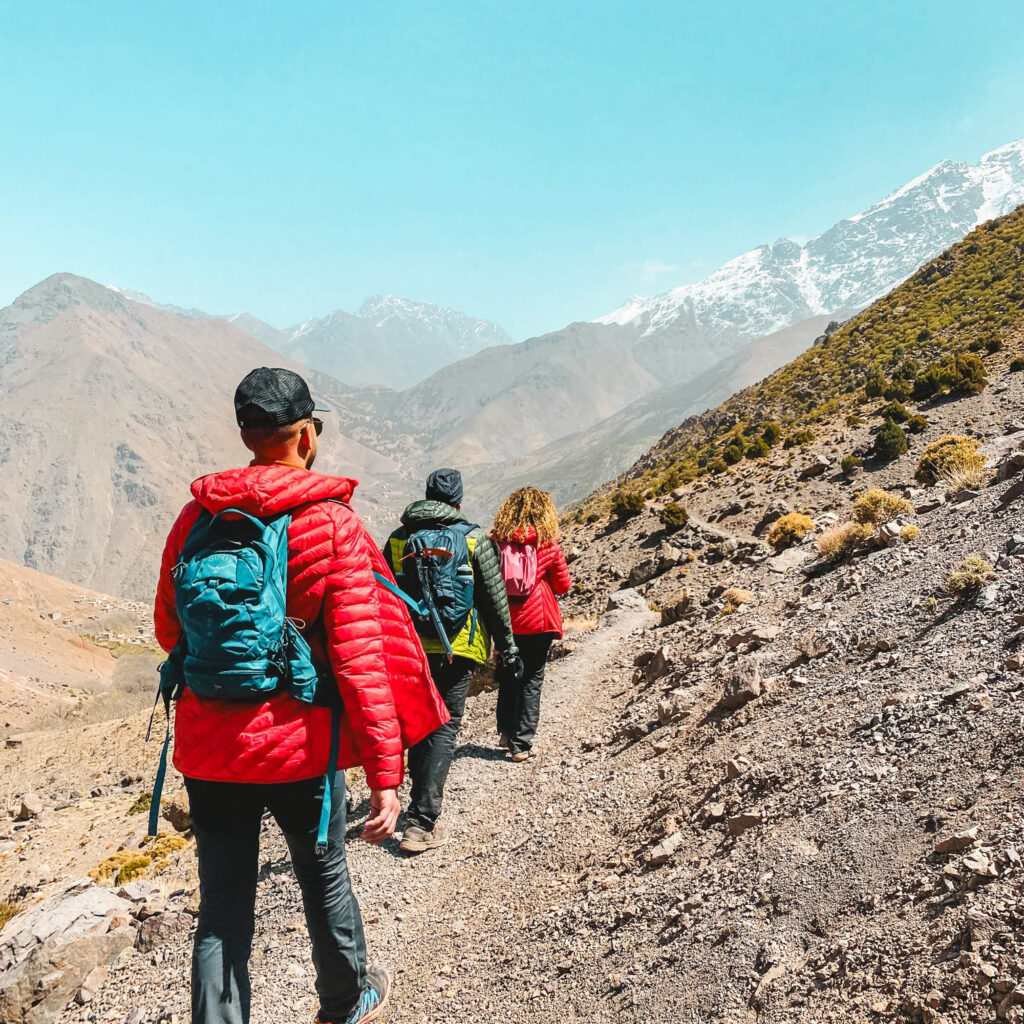
Some of the most fascinating stops lie outside the major cities entirely. Villages such as Ait David and Ait Issac, nestled in the Atlas Mountains, were once home to Amazigh Jewish communities whose way of life differed from their urban counterparts, offering a rare glimpse into rural Jewish Morocco, where Berber and Jewish traditions intertwined in daily mountain life.
Synagogues Across the Kingdom
Morocco’s synagogues range from grand sanctuaries to small, intimate prayer houses tucked into residential streets. Notable Jewish sites in Morocco include synagogues in:
- Casablanca, home to the largest remaining Jewish community and several active synagogues
- Fez, where ancient prayer houses sit within the historic mellah
- Marrakech, including the beautifully restored Slat Al Azama Synagogue
- Meknes, Essaouira, Sefrou, and Tangier, each with their own distinct synagogue architecture and history
Many of these buildings remain active places of worship or have been carefully preserved as cultural monuments, offering visitors rare access to spaces that blend Andalusian, Moorish, and Jewish design traditions.

Why Choose a Jewish Heritage Tour of Morocco
- A chance to explore Morocco’s Jewish heritage firsthand, including preserved synagogues, mellahs, cemeteries, and other historic sites.
- A closer look at centuries of Jewish, Arab, and Amazigh coexistence, with the local context that can be missed when visiting these places independently.
- A more personal way to experience Morocco, guided by someone who grew up immersed in the country’s local culture and traditions.
- Opportunities to explore beyond the usual tourist route, from historic Jewish quarters to lesser-known communities and sites.
- A flexible itinerary that fits your interests, whether your focus is genealogy and family history or you simply want to learn more about Morocco’s Jewish past.
- The freedom to combine heritage with the rest of Morocco, including its imperial cities, mountains, desert landscapes, and coastal towns.
Practical Travel Tips
- Best time to visit: Spring and autumn offer the most comfortable weather for walking tours through cities and mountain villages
- Dress code: Modest clothing is appreciated when visiting synagogues and cemeteries
- Guides: Specialists familiar with Jewish history and Hebrew inscriptions enrich a visit, especially at cemeteries and lesser-known synagogues
- Combining tours: Heritage sites can easily be woven into broader itineraries covering Morocco’s cities, coasts, and deserts
FAQs
Is it safe to visit Jewish heritage sites in Morocco?
Yes. Morocco has a long-standing reputation for religious tolerance, and Jewish heritage sites are generally well-maintained and welcoming to all visitors.
Do I need a guide to visit synagogues and mellahs?
Independent visits are possible in Casablanca and Marrakech, but a knowledgeable guide adds valuable context, particularly for cemeteries, rural villages, and lesser-known synagogues.
Can Jewish heritage tours be combined with other Moroccan experiences?
Yes. Many travelers combine these tours with the Sahara, the Atlas Mountains, and Morocco’s other imperial cities for a more complete picture of the country.
Are there still active Jewish communities in Morocco today?
Yes, though small, with the largest community based in Casablanca, where synagogues and community centers remain active.
What is the best starting point for a Jewish heritage tour?
Casablanca is often recommended, thanks to the Museum of Moroccan Judaism and its active synagogues, before continuing to Fez, Marrakech, Meknes, and beyond.
Morocco’s Jewish heritage is not a relic confined to museums, it is a living part of the country’s identity. For travelers seeking Jewish sites in Morocco and a genuine understanding of a shared history spanning millennia, this journey offers something few destinations can match.