Planning a camel tour from Marrakech into the Sahara requires more than picking a date and showing up. The desert is several hours away, the route crosses the Atlas Mountains, and how you schedule it will shape everything from the quality of your camel ride to your time in camp.
For travelers already considering trekking in Morocco, a Mount Toubkal trek, or broader Morocco Trekking tours, adding the desert can elevate the itinerary. But it needs to be structured correctly.
This guide explains how to arrange your camel tour, when to go, what the ride is actually like, and how to make the experience worth the journey.
Choosing the Right Desert Route
The first thing to understand is distance. The dramatic Sahara dunes most people picture are located near Merzouga, close to Erg Chebbi. Reaching them from Marrakech typically requires three to four days round-trip. There is a closer option in Zagora, suitable for shorter schedules, but the dunes there are smaller, and the experience feels different.
The journey itself is part of the adventure. You cross the winding passes of the Atlas Mountains, pass through Berber villages, and stop at historic fortified settlements such as the Ksar of Ait-Ben-Haddou, one of Morocco’s most iconic earthen ksars. This stretch of the journey is not just transit. It is a gradual shift from mountain terrain to the edge of the Sahara.
When arranging your camel tour, look closely at the structure. How many hours are you driving each day? Are stops included at scenic viewpoints and cultural sites? Is the camp well reviewed?
Does the schedule allow you to reach the dunes before sunset? These are the factors that separate a well-planned Sahara journey from a long drive with a quick photo stop.

When Is the Best Time to Visit the Desert
Spring, from March to May and autumn, from September to November, offer the most comfortable conditions. Days are warm without being overwhelming, and nights are cool but manageable. Summer can bring extreme daytime heat, especially in the dunes. Winter days are beautiful and clear, but evenings can become very cold once the sun sets.
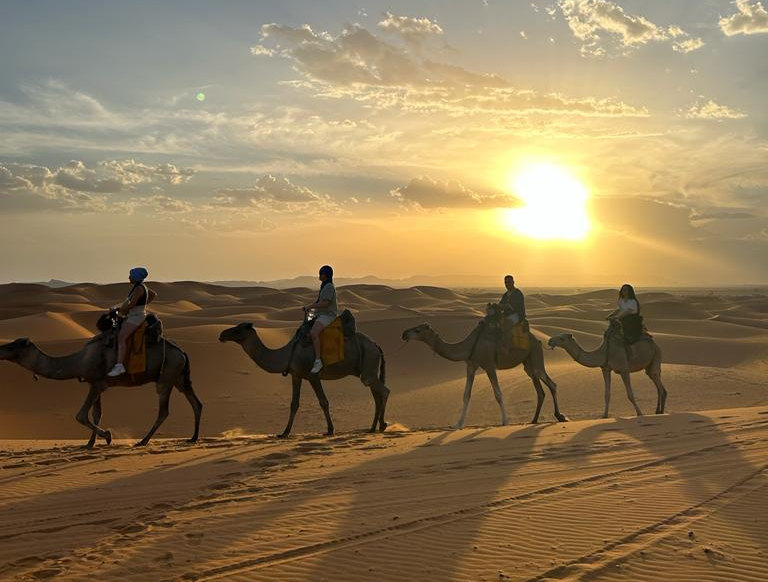
Beyond the season, focus on daily timing. Camel rides are typically arranged in the late afternoon, so you enter the dunes during golden hour. This is intentional. The sand shifts color as the sun lowers, turning from pale gold to deep amber. Shadows stretch across the ridges, creating depth and texture that feels almost unreal.
Sunrise the following morning is just as important. The wind smooths the dunes overnight, leaving soft, untouched patterns. The silence at dawn feels heavier and more intimate. A well-planned tour makes space for both moments without rushing you back to the vehicle.
What the Camel Ride Is Really Like
For many travelers, the camel ride is unfamiliar territory.
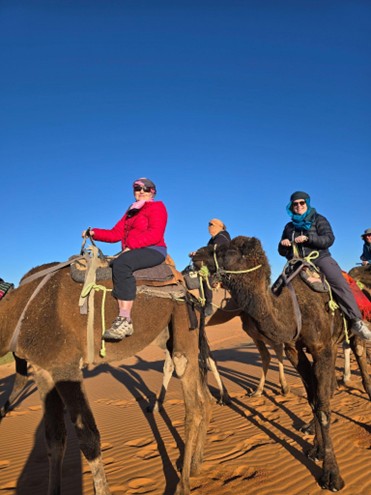
When the camel stands, it lifts its back legs first, which causes a brief forward tilt. It can feel surprising for a second, but the motion quickly becomes steady and rhythmic. The pace is slow and consistent. It is not a thrilling activity. It is calming. Once you get the hang of riding a camel, the experience can be exhilarating.
You travel in a small line into the dunes, guided toward camp. There is wind. There is space. There is very little sound beyond the movement of sand and soft conversation. Most rides last between forty-five and ninety minutes, depending on the camp location.
At camp, you settle into a Berber-style tent. Some camps are simple and traditional, others offer added comfort with private facilities. Dinner is usually served outdoors, followed by music around a fire. The highlight for many people is not the food or the tent, but the sky. With little light pollution, the stars feel close and intense.
If you have just spent days hiking in the Atlas Mountains or completing a Mount Toubkal trek, the stillness of the desert feels like a natural counterbalance.
Combining the Desert with Trekking Adventures
Many travelers build the desert into a broader adventure rather than treating it as a separate add-on.
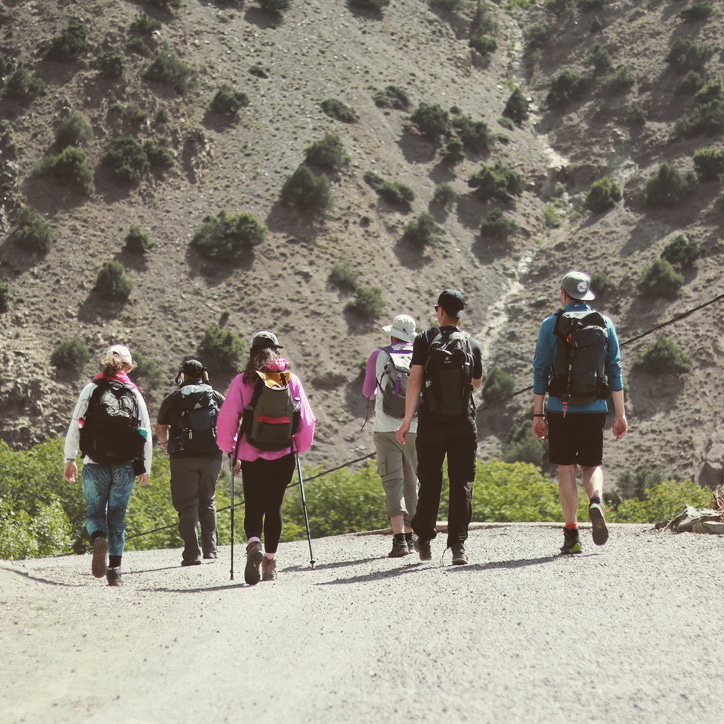
If you are drawn to trekking in Morocco, pairing the Sahara with a Mount Toubkal climb or trekking in the Atlas Mountains creates a real contrast. The mountains demand effort and endurance, while the desert slows the pace and shifts the focus.
This balance is why extended Morocco trekking tours that move from summit to sand are so compelling. Just be careful not to compress high altitude trekking and long desert drives into back-to-back exhaustion. A well-planned itinerary gives each landscape space to breathe.
How to Maximize the Desert Experience
You need to know how to pack for the desert. Pack layers because temperatures drop quickly after sunset, wear comfortable trousers for camel riding, and bring a scarf to protect against sun and wind, since small details like these make the entire experience more comfortable.
More importantly, stay present. Limited signal in the dunes can feel inconvenient at first, but it often becomes one of the most refreshing parts of the trip. Watch the sunset without filming every second, walk a short distance from camp after dinner, and sit quietly for a while, noticing how the air cools and how the sand shifts under your hands.
Small group travel also changes the atmosphere. The Sahara feels far more personal when you are not surrounded by large crowds.
Ready to Plan Your Camel Tour
If you are exploring trekking in Morocco, considering a Mount Toubkal trek, or planning extended Morocco trekking tours that combine hiking in Morocco with the Sahara, we are here to help you structure it properly.
You can also explore more insights and travel inspiration on our blog, where we share practical guides on trekking in the Atlas Mountains, desert routes, and mountain itineraries.
Reach out to us at Omar Adventures and let us plan your Marrakech to desert camel tour together. We will design an experience that connects the Atlas Mountains, culture, and desert in a way that feels seamless, well-paced, and truly unforgettable.