What if the most meaningful way to understand a place wasn’t from a city street or a tour bus, but from a long trail under open skies, where effort and connection matter more than checklists?
Today’s travelers are increasingly searching for depth over crowds, and trekking answers that need. Many adventure travelers now prioritize cultural interaction and physical activity over traditional sightseeing.
That shift explains the rising interest in Morocco trekking tours that go far beyond surface-level travel. In Morocco, challenging routes, remote villages, and ancient paths offer exactly what many of us are seeking.
In this article, we’ll look at trekking itineraries that blend physical endurance, cultural discovery, and lesser-known regions across mountains and desert alike.
Why Trekking Reveals a Different Side of Morocco
Walking through Morocco changes how we experience the country. Roads connect cities, but trails connect people, histories, and traditions. Trekking in Morocco High Atlas Mountains or along desert paths places us directly within daily rhythms that haven’t changed much over generations.
Unlike conventional travel, trekking demands time and effort. That effort is rewarded with moments that feel earned rather than arranged: tea shared with a host family, silence broken only by wind, and views that don’t appear on postcards.
Morocco trekking tours are especially compelling because they combine:
- Significant altitude and terrain variety
- Long-established Berber communities
- Ancient caravan routes still in use
- Climatic contrasts between snow-dusted peaks and arid dunes
The High Atlas: Physical Challenge with Cultural Depth
Life Along the Trails of the Atlas
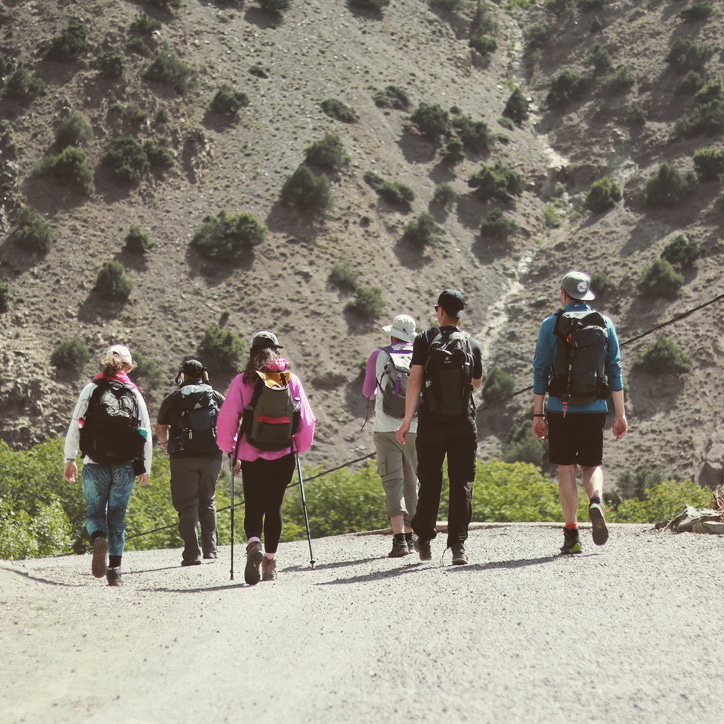
Trekking Atlas Mountain tours introduce us to villages that are often inaccessible by vehicle. Stone homes cling to hillsides, irrigation channels cut across fields, and daily life revolves around seasons rather than schedules.
As we move from valley to valley, we encounter:
- Terraced agriculture maintained by hand
- Weekly souks serving multiple villages
- Communal bread ovens and shared wells
- Local guides whose families have lived on these routes for centuries
This interaction isn’t staged. It happens naturally as part of moving through inhabited terrain.
The Mount Toubkal Experience
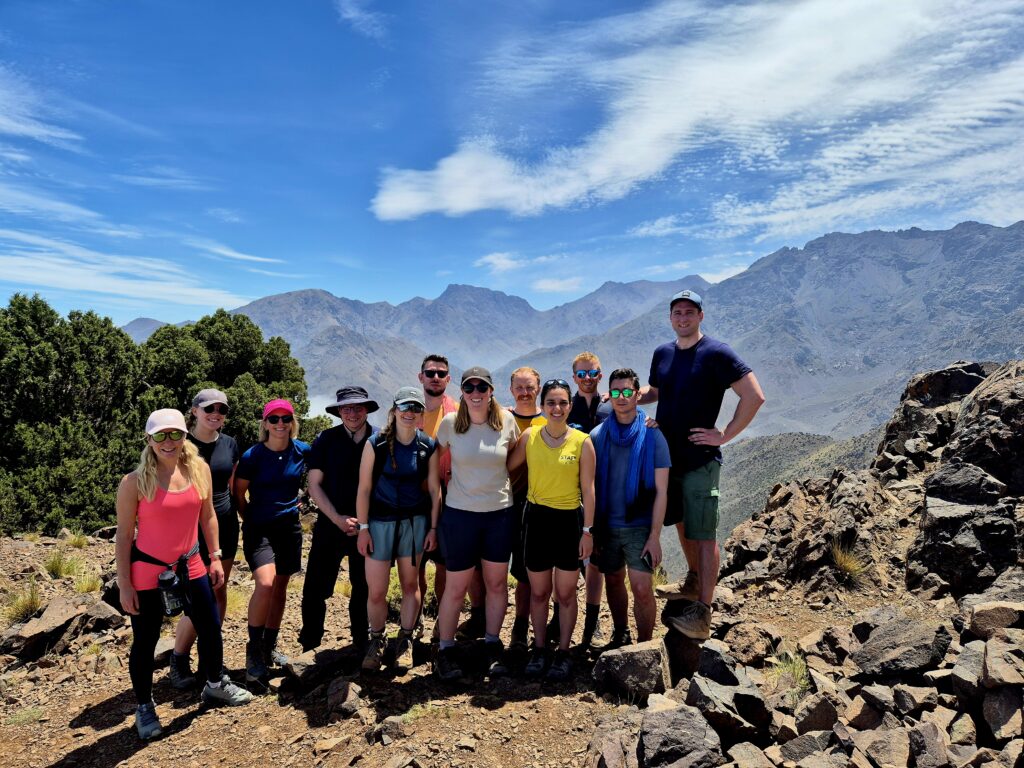
For many trekkers, a Mount Toubkal guided trek is the physical highlight of trekking in Morocco High Atlas Mountains. Rising above surrounding ridgelines, Mount Toubkal is North Africa’s highest peak, and reaching its summit requires stamina, pacing, and respect for altitude.
A typical itinerary combines effort with immersion:
- Gradual ascent through Berber villages
- Overnight stays in simple mountain refuges
- Summit attempt before sunrise
- Descents through alternate valleys to broaden exposure
The challenge lies not just in elevation, but in terrain and weather variability. Snow, rock, and wind can all play a role depending on season.
Lesser-Known Atlas Routes Worth the Effort
Aït Bouguemez: The Happy Valley on Foot
Often referred to as the “Happy Valley,” Aït Bouguemez remains less visited than central High Atlas corridors. Trekking here emphasizes connection over conquest.
Key features include:
- Wide valley floors suitable for long walking days
- Consistent interaction with farming communities
- Routes linking small hamlets rather than peaks
- Moderate elevation that still tests endurance
This area suits trekkers who value continuity and cultural presence as much as physical effort.
Remote Passes and Seasonal Trails
Beyond well-known valleys, seasonal trails connect regions only accessible for part of the year. These routes demand awareness and preparation, but reward us with solitude and rare perspectives.
Highlights often include:
- High passes used by shepherds
- Camps near alpine pastures
- Wildlife sightings uncommon near roads
- Long stretches without other trekking groups
From Stone to Sand: Trekking the Moroccan Desert
Why the Desert Is More Than Empty Space
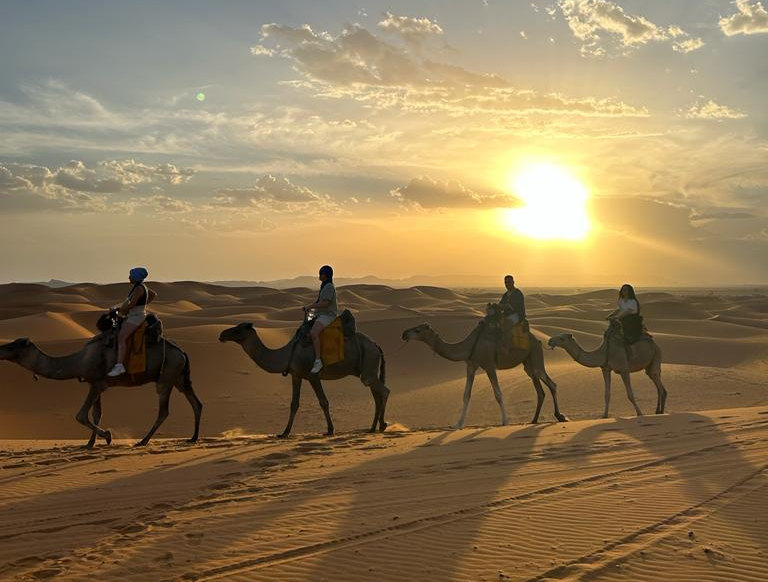
A desert trek in Morocco offers a completely different rhythm. Instead of altitude, the challenge becomes distance, heat management, and adaptation to open terrain. The Moroccan desert is not barren; it’s inhabited by nomadic traditions shaped by survival and cooperation.
A well-designed trek Morocco desert tour focuses on movement rather than static camps. Days are structured around cooler hours, with rest built into midday pauses.
What Desert Trekking Itineraries Include
Most desert treks blend physical walking with cultural learning:
- Multi-day foot travel between camps
- Nights under open skies or simple tents
- Meals prepared using local methods
- Stories and music shared around fires
Walking across sand and hard-packed earth sharpens awareness. Every step matters, and the silence encourages reflection without needing words.
Combining Mountains and Desert in One Trekking Concept
One reason Morocco trekking tours stand out is the ability to combine vastly different terrains within a single trip. Moving from mountain routes to desert paths creates contrast that deepens appreciation for both environments.
Combined itineraries often follow this structure:
- Initial acclimatization in the High Atlas
- Multi-day mountain trekking segment
- Transfer through historic trading towns
- Extended desert walking phase
This approach highlights how geography shaped trade, migration, and cultural exchange across centuries.
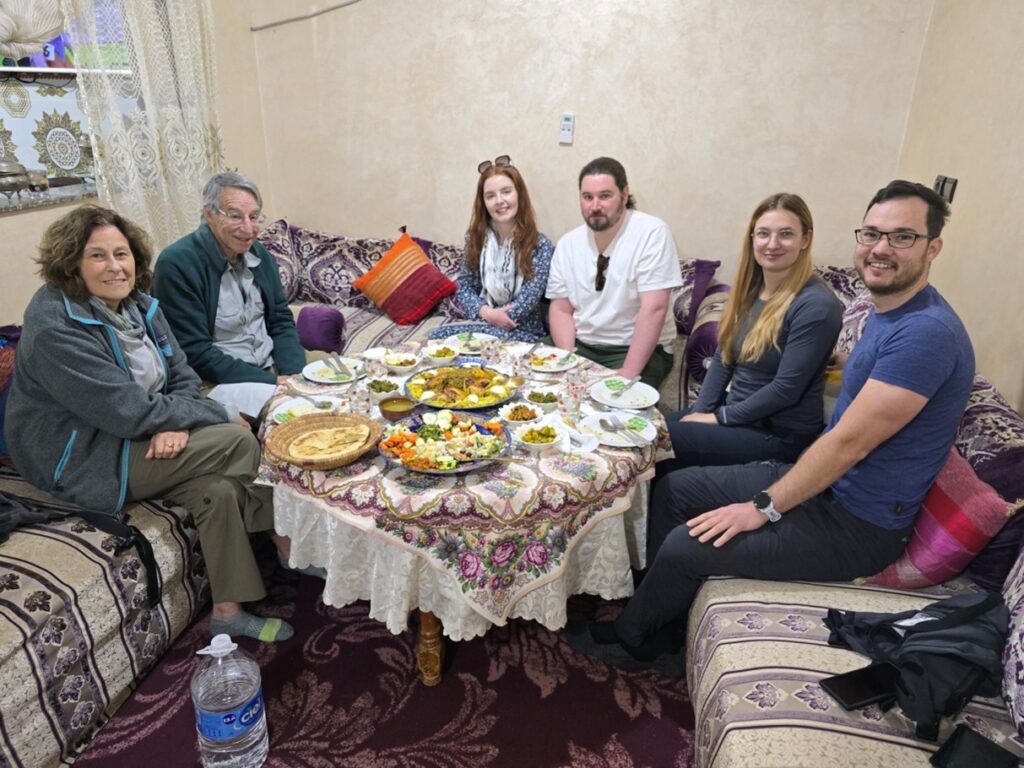
Physical Preparation Meets Cultural Respect
Fitness Expectations
Trekking in Morocco High Atlas Mountains or desert corridors requires preparation. While routes vary, most itineraries demand:
- Consecutive days of sustained walking
- Comfort with uneven ground
- Willingness to adapt to simple accommodations
- Mental resilience in changing conditions
Preparation allows us to focus on experience rather than fatigue.
Cultural Awareness on the Trail
Respect is part of responsible trekking. Simple actions go a long way:
- Greeting villagers before photographing
- Dressing modestly in rural areas
- Accepting hospitality with gratitude
- Listening more than speaking
These habits strengthen the connection between trekkers and host communities.
Where the Trail Leads Us Next
What kind of stories do we want to carry home—those collected from overlooks, or those earned step by step on quiet paths? Morocco trekking tours beyond the tourist path answer that question with every mile walked.
From a Mount Toubkal guided trek to a desert trek in Morocco, these itineraries combine challenge, learning, and connection in ways few destinations can match.
For those ready to experience trekking Atlas Mountain tours and desert routes designed around depth rather than crowds, Omar Adventures offers guided experiences that emphasize safety, cultural respect, and thoughtful pacing.
By reaching out, travelers can find routes that address both physical ambition and the desire for meaningful interaction, supported by teams who understand these trails as lived spaces rather than products.