What does it really mean to travel respectfully across the Moroccan desert on camelback?
Every year, Morocco welcomes over 17 million international visitors, and a growing share of them head straight for desert regions where camel trekking has become a defining experience.
Yet behind the scenic rides and sunset photos, there is a living culture shaped by camel handlers, Berber guides, and desert families who have worked with these animals for generations. When travelers misunderstand local customs, even simple actions can create distance instead of connection.
That is where responsible travel matters. With thoughtfully organized experiences, visitors can take part in camel trekking in Morocco while engaging respectfully with the people who make these camel tours in Morocco possible.
This guide explains how to behave with care, from interacting with guides to understanding local traditions during camel trek in Morocco routes. We will also cover etiquette, animal welfare awareness, and cultural respect so that Morocco camel trekking tours remain meaningful for everyone involved.
Respect Begins Before The First Step Into The Desert
Camel trekking in Morocco is not just a recreational activity. It is tied to daily life, tradition, and survival in desert communities. Travelers often arrive excited for camel trekking, but respectful behavior starts long before mounting a camel.
A few important points:
- Dress modestly, especially in rural desert areas
- Ask before taking photographs of people, homes, or working animals
- Learn basic greetings in Arabic or Tamazight to show goodwill
- Be patient with timing, as desert life often runs on natural rhythms rather than strict schedules
Small gestures like these set the tone for camel trekking in Morocco and help create positive interactions throughout camel tours in Morocco.
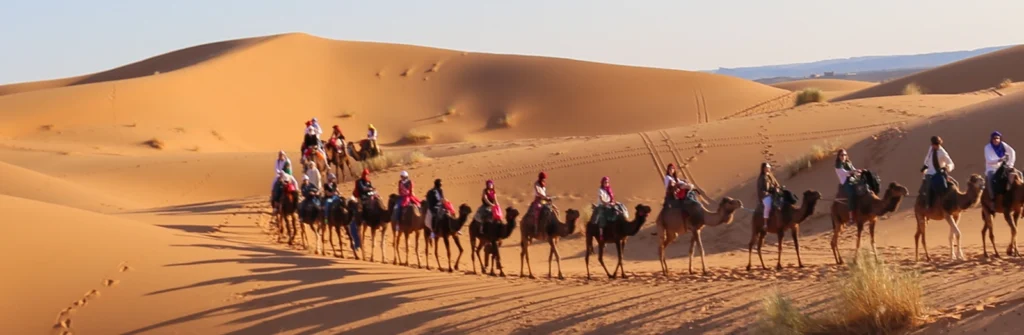
Working With Camel Handlers And Guides
Camel handlers and Berber guides are the heart of camel trekking in Morocco Desert experiences. Their knowledge goes far beyond leading animals. They understand terrain, weather shifts, animal behavior, and desert safety in ways that cannot be learned quickly.
Respectful interaction includes:
Communication And Behavior
- Listen carefully to instructions before and during the camel trek in Morocco
- Avoid interrupting guides while they are managing camels or preparing equipment
- Speak politely and avoid demanding sudden changes to planned routes or pacing
Fair Exchange And Respect
- Treat guides as professionals, not background staff
- Avoid haggling aggressively over agreed pricing on camel trekking in Morocco
- Acknowledge effort with simple appreciation rather than assumptions about service roles
Mutual respect helps ensure Morocco camel trekking tours remain safe, enjoyable, and culturally grounded.
Understanding Desert Community Customs
Desert communities in Morocco maintain traditions that predate modern tourism. When travelers take part in camel trekking in Morocco Desert routes, they are entering spaces where hospitality is meaningful, but not casual.
Key cultural expectations:
Hospitality Etiquette
- Accept tea or food when offered, as refusal can sometimes be seen as dismissive
- Do not rush visits or interactions in camp settings
- Be mindful that private spaces still exist even in open desert environments
Social Awareness
- Avoid loud or disruptive behavior near family areas or rest zones
- Ask permission before entering shared tents or gathering spaces
- Show patience when communication requires translation during camel tours in Morocco
Respect here is not formal, it is relational. It builds trust between visitors and hosts.
Respect For Camels And Working Animals
Camel trekking depends entirely on the health and treatment of camels. Ethical behavior ensures that camel trekking remains sustainable for both animals and communities.
Good practices include:
Before Riding
- Follow loading instructions without trying to assist unless asked
- Avoid sudden movements around camels, especially when mounting
During The Ride
- Sit still and balanced to avoid discomfort for the animal
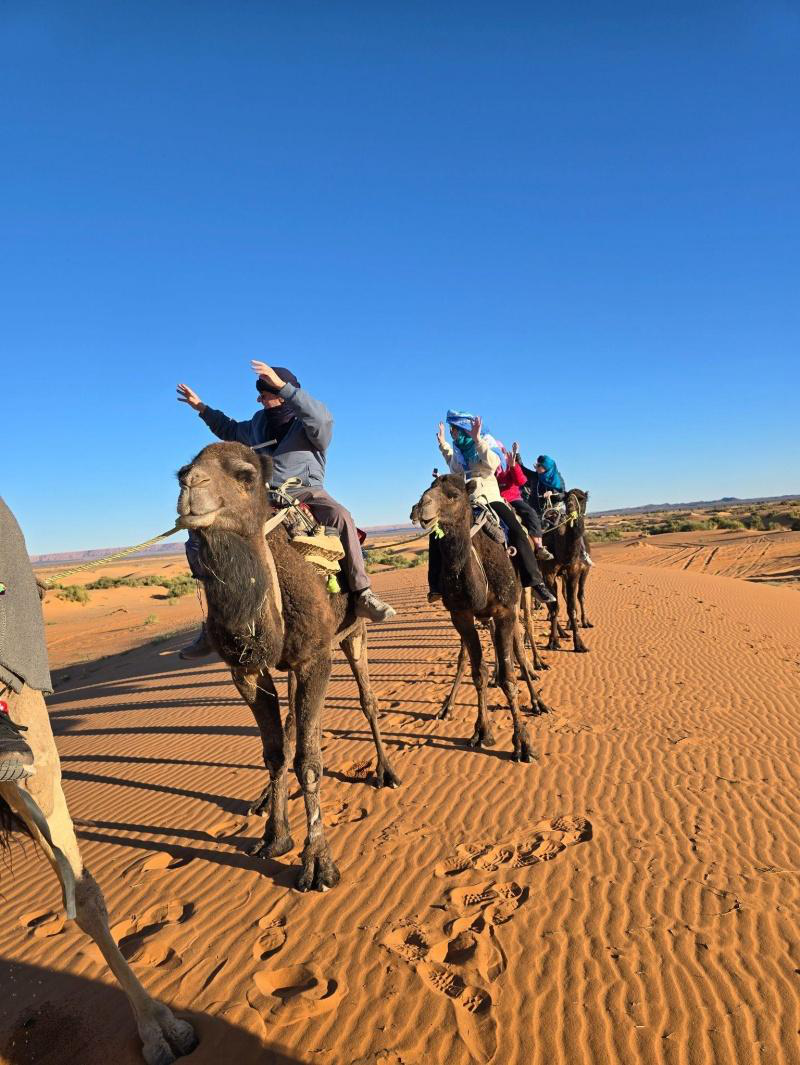
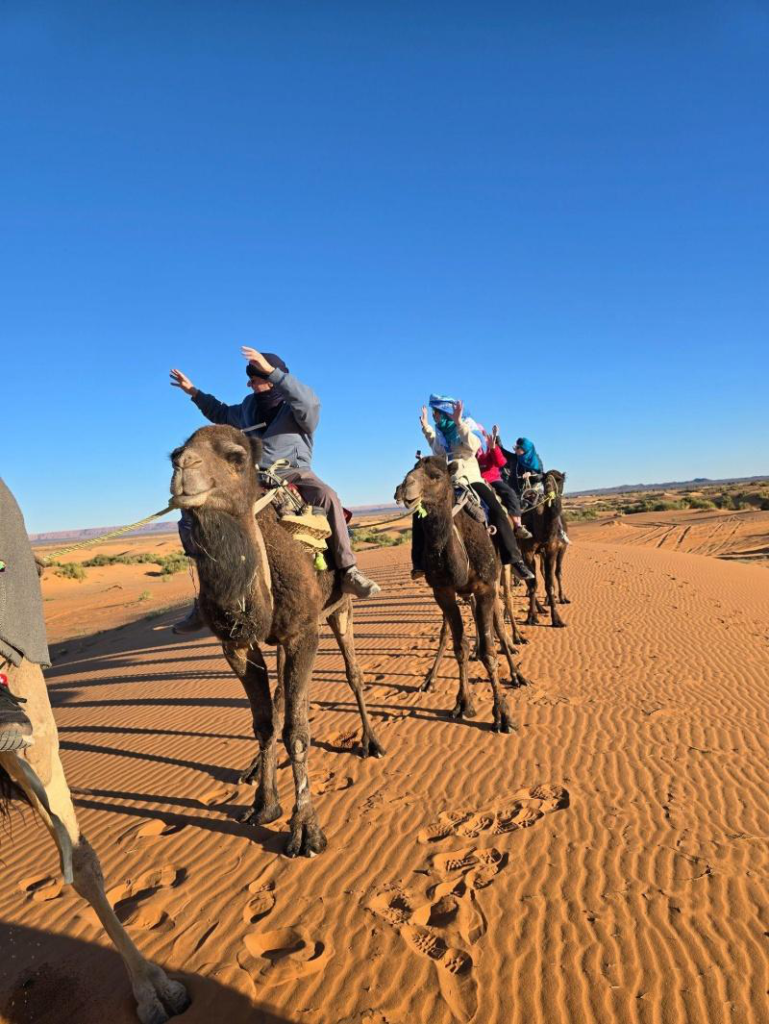
- Do not attempt to control the camel independently during camel trekking in Morocco
- Avoid feeding camels unfamiliar food unless approved by handlers
General Awareness
- Observe how handlers care for animals as part of daily routines
- Report concerns respectfully through guides rather than direct confrontation
Responsible behavior helps preserve the integrity of camel trekking in Morocco experiences for future travelers.
Photography With Respect, Not Interruption
Desert scenery and camel caravans often attract photography, but respectful timing matters more than the shot itself.
Guidelines for camel trekking photography:
- Always ask before photographing individuals, especially guides and locals
- Avoid taking close-up images of people during work without permission
- Do not interrupt instructions or camel handling for staged photos
- Be mindful that some communities prefer not to be photographed at all
A respectful approach ensures that camel trek in Morocco experiences remain comfortable for everyone involved.
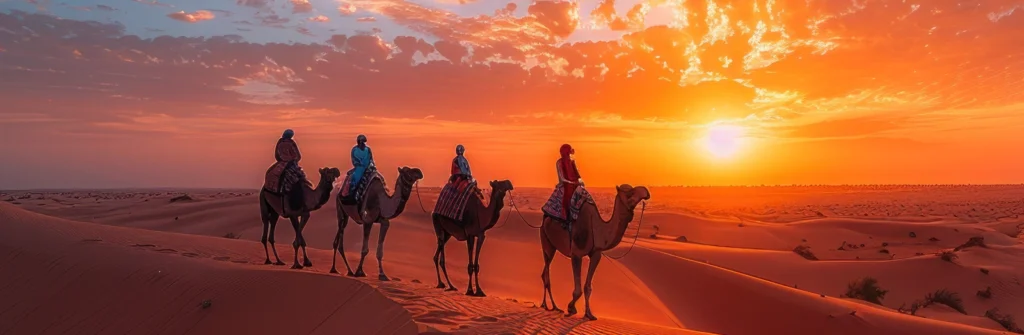
Simple Dos And Don’ts For Camel Trekking In Morocco
To make camel trekking smoother for both travelers and local hosts, here are practical reminders:
Do
- Follow guide instructions without hesitation
- Dress for sun exposure and shifting temperatures
- Carry water but avoid littering in desert areas
- Show patience during camel loading and rest stops
- Engage politely with hosts and fellow travelers on Morocco camel trekking tours
Don’t
- Treat camel trekking in Morocco as a rushed activity
- Ignore cultural boundaries in camps or villages
- Make assumptions about local customs
- Disregard animal welfare instructions
- Interrupt guides during safety briefings
These small habits improve every part of camel trekking in Morocco Desert experiences.
A Respectful Ride Through Shared Traditions
What does it really mean to share the desert with people who call it home?
Respect in camel trekking is not about strict rules, but about awareness, patience, and appreciation for traditions that continue to shape desert life. When travelers act thoughtfully, camel trekking in Morocco becomes more than an activity. It becomes a shared cultural exchange between visitors, camel handlers, and Berber guides who have preserved this way of life for generations.
At Omar Adventures, we approach camel trekking in Morocco Desert experiences with care for both cultural respect and traveler comfort. Our Morocco camel trekking tours are shaped around meaningful interaction, safety, and authentic desert engagement, ensuring that every camel trek in Morocco reflects the values of the communities we work with.
If you are planning camel tours in Morocco and want an experience that respects local culture while offering a smooth and memorable desert crossing, we are here to help arrange it thoughtfully.
Reach out to Omar Adventures to plan your camel trekking experience with care and respect for the people and traditions that make it possible.